Showing posts with label university of navarra. Show all posts

Friday, October 11, 2019

Letters to a newspaper publisher III: A shameful scandal right under your nose

How should a media executive manage the business during a time of disruptive technological change? Alfonso Nieto attempted to answer that question in his book "Letters to a newspaper publisher," written in 1987 when newsrooms in Spain were moving from typewriters to computers. His comments have acute relevance today.  

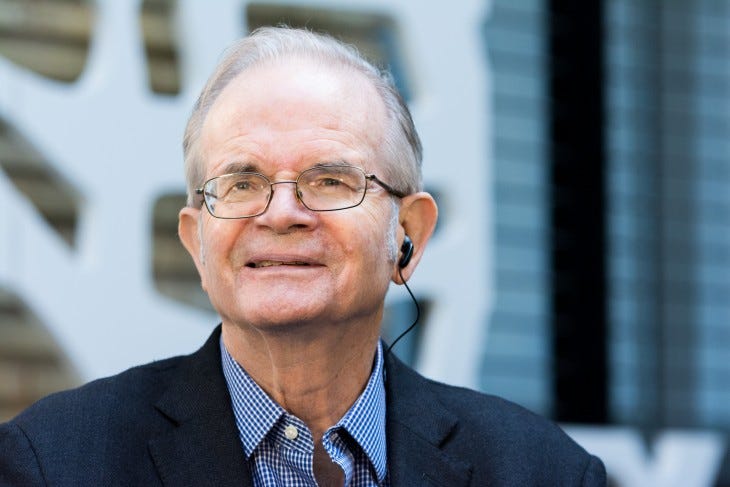
Alfonso Nieto, photo University of Navarra
In this letter to a fictitious newspaper publisher, titled "A Shameful Scandal", Alfonso Nieto criticizes media executives who are focused only on the bottom line without paying attention to the quality of the content in their own publications. (The scandal is a defamation lawsuit against a reporter.)

Nieto also emphasizes the importance of hiring journalists with high ethical standards. "This profession is so prominent that it should exclude those of mediocre character who are untrustworthy, resentful, or selfish" (p. 58).

The top executives of the media organization have the responsibility to communicate clearly the editorial standards of the organization, Nieto says. Without that, there is disorder in the newsroom. In the absence of clear direction, each section editor creates their own fiefdom, and "this disorder is the key that opens the door to misinformation and mistakes" (pp. 59-60).

Wednesday, October 9, 2019

Letters to a publisher II: Treat your readers with respect

How should a media executive manage the business during a time of disruptive technological change? Alfonso Nieto attempted to answer that question in his book "Letters to a newspaper publisher," written in 1987 when newsrooms in Spain were moving from typewriters to computers. His comments have acute relevance today.


Alfonso Nieto, University of Navarra portrait
In this letter to a fictitious newspaper publisher, which he titled "The dwarf and the giant", Alfonso Nieto criticized media owners, managers, and journalists for failing to take into account the problems and the needs of their readers. Nieto saw the media industry as arrogant, looking down on the public and their viewpoints.

Beyond that, the media viewed their audiences as merely market segments to be lumped into groups based on age, gender, income, occupation, or other attributes that they could monetize. 

The arrogance

The media used a language, he believed, that emphasized their superior education and social position rather than trying to create a more intimate connection with their readers. This could very well describe the traditional media today, which have been losing readers and TV viewers because they focus much of their attention on the conflicts among political parties rather than finding solutions.

Letters to a newspaper publisher: it's not just the bottom line

How should a media executive manage the business during a time of disruptive technological change? Alfonso Nieto attempted to answer that question in his book "Letters to a newspaper publisher," written in 1987 when newsrooms in Spain were moving from typewriters to computers. Nieto was one of the pioneers in the discipline of media economics, and his writings have acute relevance today, when the media world has been disrupted again by digital technology. He was rector of the University of Navarra 1979-1991, where I now teach. 

Alfonso Nieto, University of Navarra Photo
Alfonso Nieto worked as a consultant to media executives in addition to teaching, and in this book he wanted to go public with his advice without violating any confidential information. So he created a fictitious news executive to whom he wrote a series of letters with some down-home advice. He wanted publishers to think not just of their business results and their investors but also of their publication's impact on employees, the audience, and democratic society as a whole. 

(It is interesting to note that the Business Roundtable, an organization of business leaders in the U.S., recently advocated a major change in management philosophy in line with Nieto: take into account all stakeholders--employees, customers, suppliers, and community--not just the shareholders.)

Saturday, November 11, 2017

Chasing clicks isn't bringing in readers or money


Some observations by media economics expert Robert Picard's observations about the challenges of media today, from an interview done by the University of Navarra Faculty of Communication:

Media companies need to develop revenue from many more sources than they did in the past.

Media companies are diluting the quality of their product by chasing reader clicks with light or frivolous digital content. "This is not bringing in money, and it's not bringing in audience."

Versión en español

Maybe 15 to 25 percent of the reading public will pay for serious news, Picard says. These are the people who really want news.

Journalists think their work is really important, and for the journalists, it is. But for most people, they just want to get on with their lives. If something important happens, then they will go online and read it somewhere, but most of the time they won't pay for it.

Newspapers have to stop thinking of themselves as a product for a general audience. The people who still subscribe tend to be the most active politically, socially, and financially in their communities. Newspapers should be selling that aspect of their audience, not a massive audience.

Sunday, October 1, 2017

Picard to publishers: get cozy with readers, users

Robert Picard speaking to class at University of Navarra.

Robert G. Picard is one of the founding fathers of the academic discipline known as media economics. The field has attracted more attention lately as news outlets, ravaged by digital competitors, have gutted their reporting staffs and slashed public-service coverage.

Policy makers, media executives, investors, and journalists themselves look to experts like Picard for answers about how to deal with the industry's financial crisis and the diminishing supply of news.

Picard admits that he is unsure of exactly what the future holds for the industry. What he does know is that the people who are running media organizations--TV, radio, newspapers, magazines, and even digital outlets--know far too little about their readers, viewers, listeners, and users.

Publishers need to invite these consumers into the processes of creating and distributing content, he said. They need to think about how to create value that will satisfy the needs and solve the problems of their users. 

Sunday, January 29, 2017

A voice for free speech in a free world

Marty Baron, center, with U. of Navarra faculty and students. Photo by Manuel Castells

Marty Baron, editor of the Washington Post, came to speak at University of Navarra events in Madrid and Pamplona last week.

Baron's message made me proud to be an American and a journalist. The whole world looks to the U.S. for leadership. Here is an excerpt from his speech in Madrid.

"At the center of our mission is journalism that holds powerful institutions and individuals accountable. We have an obligation to speak truth to power. And the powerful in our world should never be allowed to suppress it.
For all the challenges we face in the media today, this is the greatest. It is why we as journalists must stay faithful to our central purpose. Someone must still tell things as they really are.
No government power, no powerful institution, and no powerful individual should have the right to stop us. And we in the press should not stop ourselves because of fear or self-censorship. These are times to remind ourselves what it means to be a free people, times to think hard about what is required of us if we wish to hold on to the freedoms that we value.
In too many countries, in too many ways, our liberties are being placed at risk. Among those most in jeopardy are free expression, including a free press. For those of us who work in the press, and for all who cherish the free expression that gives meaning and life to our democracies, the quality we now need most, is courage."

Friday, October 7, 2016

'Take risks, learn from mistakes,' says film-maker

Joffé spoke to several hundred students at the University of Navarra on Thursday.

Film-maker Roland Joffé has a way of leading people on a mystical meditation to find out who they are and how they will communicate with the world.

"The truth is that no one in this room actually knows where we are," he told about 400 students and professors Thursday at the University of Navarra School of Communication. "And if we don't know where we are, how on earth can we know who we are. And finding out who you are is all your journey, isn't it?

"Communication is about finding out who you are and listening to other people and finding out who they are. And that's very beautiful."

Joffé is best known for directing The Mission and The Killing FieldsBut he holds a special interest for the University of Navarra audience because he wrote and directed There Be Dragonsa film about the founder of Opus Dei and the university, St. Josemaría Escrivá de Balaguer. (Our colleague Jaume Aurell was a historical adviser on the film.)

Make choices, take risks

Joffé encouraged students to take risks and learn from their mistakes, "Because that's the only way we learn. We're in a great vortex of communication. When we communicate, or when we create a film or a work of art, we can get it wrong. That's not scary, because we all make mistakes, and getting things wrong is part of the process, and listening to those who tell us we've got it wrong is an act of love."

Sunday, March 6, 2016

Your career is an adventure: Be an adventurer

Last week the Department of Communication at the University of Navarra invited 16 alumni with interesting career paths to share their stories with the students. 

I attended four of the sessions and heard a similar comment from each of the presenters: I never imagined that I would be doing the things I am doing now in my professional career. A journalism major was hired in public relations by a German automaker, partly because he learned German during a year of study abroad. Another journalism major's assignment to cover sporting events, in which he had little expertise, eventually led to assignments covering culture and entertainment, which he loves.

Many unimaginable opportunities presented themselves at unexpected moments from unlikely sources. Professional life for them had been an adventure.

Iñaki Gabilondo, Foto de biografiasyvidas.com
Versión en español

The advice these alumni gave also ran along similar lines: You need to be flexible, learn at every stage of your career, and commit yourself to doing the best work you can.

These comments brought to mind an interview I heard a while ago with another graduate of the University of Navarra's journalism program, an icon of Spanish radio and television, Iñaki Gabilondo. He spent two decades at the head of one of Spain's most-listened-to daily news radio programs, anchored a nightly news program and today has a video commentary blog called the Voice of Iñaki (La voz de Iñaki, Spanish).

Thursday, January 28, 2016

ProPublica pioneers investigative journalism for the digital age

PAMPLONA, Spain -- Given all the trash, half-truths and outright lies published on digital media, people are placing a higher value on media that verify information and demonstrate high ethical standards.
Paul Steiger, taking questions at U. of Navarra event

Paul Steiger, founder and executive chairman of ProPublica, tells of a major donor to his online publication who "absolutely hated" an investigative story that they had published about a group "near and dear to the donor's heart". Steiger told the donor that the information was verified, and the story was fair. "We will just have to agree to disagree," he told the donor.

The donor, who had given $100,000 every year, stopped giving. And that would have been the end of the story, except that a year later, with no explanation, the donor's annual check arrived again. Steiger's point was that even people who disagree with you still respect journalism with high standards of accuracy and ethics.

Versión en español

He made his comments to students and faculty of the University of Navarra during a series of public presentations and interviews with various media. He described some of the keys to producing effective investigative journalism even while traditional news media have been cutting back on staff and in-depth reporting. (You can see coverage of his talks, in Spanish, from El Español, El Pais, ABC, Público, ElMundo, and Infolibre, along with a Storify of Tweets in English and Spanish.)

Wednesday, July 15, 2015

An exercise on usability puts theory into practice

At the end of a semester-long course in digital journalism, I asked my students at the University of Navarra in Spain to say what they thought was the most interesting or useful part of the course. The survey was anonymous, so I give it some credibility.

The question was open-ended. The second-most-mentioned item was a class exercise I gave them in which they had to judge the navigability, usability, transparency, and other factors of any website they liked. This group exercise put theory into practice and developed their analytical skills.

(No. 1 was the video interviews with digital media entrepreneurs from Latin America. They are in Spanish and can be seen on my YouTube channel. Accompanying text in English is available elsewhere on this blog.)
The exercise took 45 minutes and followed a 45-minute lecture on the theory of Internet design, especially as it applied to taking advantage of mobile and social platforms.

First, I told the students that they were going to do an ungraded analysis of various characteristics of a website or application. They could do it in groups of three or four. I showed the students a list of about a dozen websites that I knew were popular but told them they could also choose any that they liked.