Showing posts with label Spain. Show all posts

Sunday, November 17, 2019

My newsstand guy is quitting, victim of digital media

PAMPLONA, Spain -- For the past five years I have been buying my newspapers on the weekend at a neighborhood newsstand. The owner and I, Jesus Erro, got to be casual friends, and we talked about the politics and culture of our respective countries. He is a big reader.

Sign in the window announces the owner is retiring and closing the shop.
This weekend, I found out he is closing his doors and retiring after 27 years at that location. Nobody wanted to buy the business, and he had reached the legal age to retire, 62. His son is a teenager, and his wife works for the local government, and he plans to focus on them. But beyond that, he isn't sure what he will do.  

Versión en español

Three years ago, I interviewed him to get his perspective on the newspaper business in Spain. All the dailies were suffering at that time. It had been in a steady decline since 2008, first because of the financial crisis and then because of consumers' switching to digital platforms to get their news. Lately, it has gotten even worse.

Erro loves books, and his original idea when he bought the shop was to sell books. Newspapers were just a sideline. With the crisis, he also took to selling bread since lots of cafes and bakeries opened up nearby and also sold the local newspapers.

Below is a video of our 2016 interview, with subtitles in English.


On Tuesday, Nov. 19, Erro will close for the last time. He had a clearance sale going on. I bought an armload of National Geographic specials on science and archeology.

There are few nearby places to buy the national press, so I'm not sure what I will do. I still like the printed editions, especially on the weekends when there is a lot more to read.

Most of all, I'm going to miss our conversations.

Here is a link to our original interview: Newsstand owner adapts to survive media crisis

Friday, October 11, 2019

Letters to a newspaper publisher III: A shameful scandal right under your nose

How should a media executive manage the business during a time of disruptive technological change? Alfonso Nieto attempted to answer that question in his book "Letters to a newspaper publisher," written in 1987 when newsrooms in Spain were moving from typewriters to computers. His comments have acute relevance today.  

Alfonso Nieto, photo University of Navarra
In this letter to a fictitious newspaper publisher, titled "A Shameful Scandal", Alfonso Nieto criticizes media executives who are focused only on the bottom line without paying attention to the quality of the content in their own publications. (The scandal is a defamation lawsuit against a reporter.)

Nieto also emphasizes the importance of hiring journalists with high ethical standards. "This profession is so prominent that it should exclude those of mediocre character who are untrustworthy, resentful, or selfish" (p. 58).

The top executives of the media organization have the responsibility to communicate clearly the editorial standards of the organization, Nieto says. Without that, there is disorder in the newsroom. In the absence of clear direction, each section editor creates their own fiefdom, and "this disorder is the key that opens the door to misinformation and mistakes" (pp. 59-60).

Monday, April 16, 2018

'Students, you will determine the future of journalism'

"You have to practice the values of independence and honesty." University of Navarra photo.

An icon of Spanish broadcast journalism, Iñaki Gabilondo, delivered a message last week designed to inspire and challenge 400 students and professors of journalism.
"The future hasn't been written yet:, he told them. "The question, 'What is going to happen?' is irrelevant. What will happen will be determined by what you do, what you don't do, and what you allow to happen."
Gabilondo, 73, was speaking at his alma mater, the School of Communication of the University of Navarra (class of 1963), where he also was a professor for several years. His eloquent baritone voice is well known to Spaniards after decades of presence on the morning radio news program Hoy por Hoy, roughly equivalent to NPR's Morning Edition.

He recently asked Martin Baron, executive editor of the Washington Post, how journalism can survive amid all the problems we face, including the collapse of the economic model, the loss of credibility with the public, and the misinformation, disinformation, and junk published everywhere.

Versión en español

The key, Baron replied, lies in practicing the values at the heart of the profession: editorial independence, credibility, honesty, and commitment to quality. "These are not just romantic ideas," Gabilondo said. "They are the essential elements of journalism. With these values you can move ahead. They are going to last."

These days Gabilondo does a brief commentary on the news via a video blog carried on the website of El País, the country's leading daily newspaper. But he recently did a series of video interviews titled "When I'm not around: The world in 25 years", with leading scientists and technologists around the world. So Gabilondo is more interested in looking forward than in looking back.

Monday, February 12, 2018

Where the jobs are for graduates in journalism

"The new journalism specialties". The graphic shows that 56% of the Spanish journalists surveyed work in media that have community managers, and 30% employ data and traffic analysts. Click to enlarge the graphic.
Where will the jobs be for graduates in journalism and communication? The results of a survey of journalists in Spain give some indication. The urgent demand is for people with digital media skills, but more on that in a minute.

The Press Association of Madrid's (abbreviated to APM in Spanish) 2017 survey was sent to 13,500 professionals, and the overall response rate was a respectable 13%. A little more than a third were working in journalism while another third were working in other professions or were retired or semi-retired. The remaining 30 percent were working in communications, mainly advertising and public relations. (News articles about the survey are here, here, and here in Spanish.

Disconnect in training

The survey results show that the respondents to the survey are not the ones who are filling the new digital media jobs in their newsrooms. For example, 56% of the respondents said their publications had digital community managers--the people responsible for interacting with users in social networks and other channels--while only 13% of the respondents said they were working in those jobs.

Tuesday, June 20, 2017

When they trust media less, they're willing to pay more

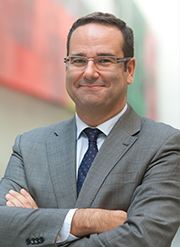
Alfonso Vara-Miguel
A new study of internet users in Spain shows that those who trust "the media" less are more willing to pay for news online. 

The explanation for this counterintuitive behavior is that those distrustful folks "are willing to pay for those specific media that they trust", according to the researchers, Alfonso Vara-Miguel of the  Universidad de Navarra and Manuel Goyanes of the Universidad Carlos III of Madrid.  

(The full text of their article is in Spanish:  "The probability of paying for digital news in Spain," in El Profesional de la Información.)

In other words, trust and confidence have an economic value that media organizations can monetize


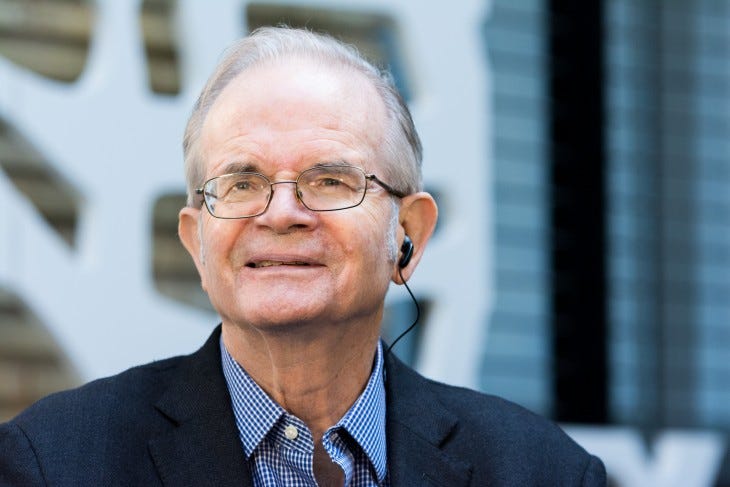
Manuel Goyanes
Getting people to pay

Media economists like to say that the Spanish are legendary cheapskates when it comes to paying for any form of media. But the researchers believe they have identified some of the market segments most likely to pay for news

They base their conclusions on the Digital news report 2016, which came from a survey of a representative sample of 2,100 Spanish adults, executed by YouGov and coordinated by the Reuters Institute for the Study of Journalism at Oxford University. The most relevant findings follow.

Thursday, April 6, 2017

'Know your clients, give them what they need'

Ingelmo: "Clients don't want to wait three hours for a graphic."
Manuel Benito Ingelmo has blended his knowledge of data, technology, and journalism to establish a news service with some of the biggest media in Spain as his clients.

His data-visualization service, Porcentual.es, just finished its most successful year, and Ingelmo continues to innovate and improve his products.

He and a team of two programmers have developed software that pulls data from public databases and produces graphics in minutes for media organizations to embed in their web pages. They can also customize the data geographically so that a newspaper in the city of Seville, for example, can get the latest unemployment figures for its area.

"We're very fast," Ingelmo says. "Speed matters. Our clients don't want to wait three hours for a graphic. They want it right now," he told me recently in a Skype interview from his home in Vitoria, northern Spain.

Monday, October 17, 2016

Sage advice from Spain's 'mastermind of startups'

Antai Venture Builder nurtures startups. Photo by Caterina Barjau, in El Pais.
Miguel Vicente was an industrial engineer with a hefty salary when he decided to throw it all overboard nine years ago and launch a coupon site.

He gave some memorable quotes that should be heeded by any entrepreneur during an interview with Daniel Verdu of Spain's prestige daily newspaper, El Pais.

"It's like the two pills in Matrix, you have two options: the blue one is for a secure paycheck at the end of the month, the support of a big group that will help you, nice vacations and weekends. And the red pill is the one for entrepreneurs: you won't have anything you had before and you won't even know if you will be around the next day. But you will be the owner of your destiny. That feeling, plus the notion that you cannot fail, makes you pull out the best of what you have inside." 
His first startup was called Lets-Bonus. He sold that and eventually he and two partners launched Wallapop, a mobile app with location technology for buying and selling second-hand goods with nearby users. It is similar to a CraigsList for Spain and has reportedly attracted more than $100 million in investment. Some speculate that its market value might be $1 billion, unicorn territory.

Saturday, October 8, 2016

Newsstand owner adapts to survive media crisis

Newsstand owner Jesus Erro: Publishers are fudging their sales numbers.
PAMPLONA, Spain - Those who study the business of media tend to look at it from the perspective of journalists and publishers. But the owner of a newsstand in the heart of this provincial capital has a different point of view.

Jesus Erro, 56, has owned and operated Caprichos Books and Stationery for the past 24 years. He has seen the good times and the bad.

For the first decade or so, sales of magazines and newspapers -- about three fourths of his business -- were strong. But beginning in 2008, with the combination of the financial crisis and the Internet's impact on sales of print products, the business has gone down steadily.

Versión en español

"For small shops in this industry, it's very difficult to survive. A few years ago, when there was a favorable economic climate, everything was straightforward, more or less. You never expected to make a lot of money but you did expect to make a decent income. But now with everything that has come along -- the Internet, the economic crisis -- Pffff. We are trying to make just enough money to survive in these kinds of shops."

Wednesday, June 22, 2016

Spain's most successful digital journalism startup

In our search for the next big thing, we often overlook some of the steady innovators who grow organically without millionaire investors or crushing debt loads.

Alfonso Vara-Miguel of UNAV
One such example is El Confidencial of Spain (their slogan: "The preferred daily of influential readers").

This is a digital news publication whose value proposition for 15 years has been to offer quality news exclusives "that other media cover up or don't publish because of their overlapping political and business interests," according to researcher Alfonso Vara-Miguel, professor at the University of Navarra (in Innovación y desarrollo de los cibermedios en España, 2016, Eunsa, Pamplona, pp. 166-77).

Spanish news consumers are more skeptical of their news media than most (more on that below), so this independent-spirited publication, with a philosophy of spending no more than it takes in, has racked up some impressive numbers:

  • advertising revenue exceeded US $9.9 million in 2014
  • after-tax profits were US $1.3 million in 2014
  • full-time staff numbered more than 100
  • it averaged 735,000 daily readers in August 2015 (ComScore)

The value proposition is exclusive journalism free of political and business influence. 

Versión en español

Saturday, March 19, 2016

14,500 friends lay out cash for aggressive journalism

Amid all the bad news about business models for high-quality journalism, eldiario.es ("The Daily") in Spain shows that good journalism can be good business.

Escolar: "Journalism is a public service that has to be profitable"
Its founder and CEO, Ignacio Escolar, just announced that the publication finished 2015 with revenues of US$ 2.6 million, up 33% on the year, and a profit after taxes of US$ 235,000.

Although the digital publication is free, its 14,500 "partners" (socios) pay at least US$ 66 a year to get access to the news a few hours ahead of everyone else as well as ad-free pages, discounts, and invitations to events.

Those partners brought in about a third of eldiario.es's revenues, "And they allow us to remain independent," Escolar said in his announcement. Although advertising brings in more than the partner revenue, no single advertiser comes close to bringing in what the partners do, so none has enough leverage to influence editorial decisions, he said.

Versión en español

Sunday, March 6, 2016

Your career is an adventure: Be an adventurer

Last week the Department of Communication at the University of Navarra invited 16 alumni with interesting career paths to share their stories with the students. 

I attended four of the sessions and heard a similar comment from each of the presenters: I never imagined that I would be doing the things I am doing now in my professional career. A journalism major was hired in public relations by a German automaker, partly because he learned German during a year of study abroad. Another journalism major's assignment to cover sporting events, in which he had little expertise, eventually led to assignments covering culture and entertainment, which he loves.

Many unimaginable opportunities presented themselves at unexpected moments from unlikely sources. Professional life for them had been an adventure.

Iñaki Gabilondo, Foto de biografiasyvidas.com
Versión en español

The advice these alumni gave also ran along similar lines: You need to be flexible, learn at every stage of your career, and commit yourself to doing the best work you can.

These comments brought to mind an interview I heard a while ago with another graduate of the University of Navarra's journalism program, an icon of Spanish radio and television, Iñaki Gabilondo. He spent two decades at the head of one of Spain's most-listened-to daily news radio programs, anchored a nightly news program and today has a video commentary blog called the Voice of Iñaki (La voz de Iñaki, Spanish).

Thursday, January 28, 2016

ProPublica pioneers investigative journalism for the digital age

PAMPLONA, Spain -- Given all the trash, half-truths and outright lies published on digital media, people are placing a higher value on media that verify information and demonstrate high ethical standards.
Paul Steiger, taking questions at U. of Navarra event

Paul Steiger, founder and executive chairman of ProPublica, tells of a major donor to his online publication who "absolutely hated" an investigative story that they had published about a group "near and dear to the donor's heart". Steiger told the donor that the information was verified, and the story was fair. "We will just have to agree to disagree," he told the donor.

The donor, who had given $100,000 every year, stopped giving. And that would have been the end of the story, except that a year later, with no explanation, the donor's annual check arrived again. Steiger's point was that even people who disagree with you still respect journalism with high standards of accuracy and ethics.

Versión en español

He made his comments to students and faculty of the University of Navarra during a series of public presentations and interviews with various media. He described some of the keys to producing effective investigative journalism even while traditional news media have been cutting back on staff and in-depth reporting. (You can see coverage of his talks, in Spanish, from El Español, El Pais, ABC, Público, ElMundo, and Infolibre, along with a Storify of Tweets in English and Spanish.)

Wednesday, December 16, 2015

Innovative podcasts and the future of journalism

Olga Ruiz: Create something unique.
PAMPLONA, Spain -- In August of 2013, Olga Ruiz returned from a refreshing summer vacation ready to start her 16th season on the COPE radio network in Barcelona.

But on her arrival, the managers told her and her team that they were being fired. "The best period in my professional life began the moment they fired me," she told me. "They gave me a second life in journalism."

Two weeks later, she invited her old team and some other journalists to her home for dinner. They decided to launch a new radio organization with long-form stories of up to 30 minutes on topics ignored or treated superficially by mainstream media. They would devote obsessive attention to the quality of the sound.

Versión en español

Friday, October 2, 2015

Laid-off journalist finds niche in data visualization

Getting laid off is not always a bad thing for a journalist. In the case of Manuel Benito Ingelmo, it created an opportunity for him to develop something he had been thinking about for a long time.

Manuel Benito Ingelmo. Photo by Villanueva.edu
He was a business journalist in Salamanca, Spain, with an interest in statistics and data visualization.  He felt that print newspapers were definitely on the way out, he told me in an interview via Skype.

"I wanted to make the jump to a digital publication but I did not want to do the same thing as we were doing on paper."

Versión en español

So when he was laid off from a small daily in 2012, he took his severance package and began to experiment with how to take advantage of the strengths of digital media -- interactivity, instantaneous publication, potential massive audience -- to create a journalistic product or service that would build on databases that were already available.

He and a handful of partners started out by giving away simple graphics on unemployment to media organizations. His idea was that these organizations could use these graphics instead of stock photos of people in unemployment lines. "In just two or three months, we reached 100 media organizations throughout Spain. We found that there was a market niche, the possibility to sell something. Then we had the problem of how much to charge for the service."

Saturday, July 18, 2015

Cultural publication 'flirts with the Dark Side' in Spain

El Pais announces the alliance on its website.
(Updated Aug. 22, 2015; versión en español)


The iconoclastic Spanish culture magazine Jot Down is a strange creature in many ways. At a time when people supposedly read little and do it rapidly, it publishes long interviews and essays.

In an age of minute-by-minute updates and clickbait, Jot Down makes its money by charging about US$16.75 for each copy of its massive 320-page quarterly, which carries only two or three pages of advertising.

Another oddity: its target market is not the famous millennials so sought after by many media but rather more-mature folks in their 40s and 50s. It is an edgy publication that attracts people “who think of themselves as young,” says publisher Angel Fernandez, 44, who co-founded it four years ago.

Marriage of convenience

Surprisingly, it is viable, profitable, and growing. But possibly strangest of all, it has just reached agreement to share its content with one of the media icons of Spain, in fact a symbol of much of what Jot Down criticizes about traditional media, namely El Pais. Ironically, several of the magazine’s contributors were laid off by El Pais during the long economic downturn and have not hesitated to bash their former employer.

Wednesday, June 24, 2015

Nonprofit journalism tries to make it in Spain

PorCausa is a new species of digital media for Spain: nonprofit journalism.

Its founder and director, Gumersindo Lafuente, is a respected veteran of some of Spain's most important media -- El País, El Mundo, and the late lamented digital pioneer Soitu.es). Given the limited resources available, he runs the operation much in the style of a movie director by signing some of the 21 affiliated professionals on a per-project basis. 

gumersindo lafuente burgos iredes
Lafuente emulates Propublica of the U.S. (Photo: James Breiner)
"When we secure financing, we put together a team for the project. When we finish, we dissolve the team," he said in an interview.

Poverty and inequality

PorCausa is an experiment in several senses. It is not a news medium but a foundation that was launched in 2013. It is a novelty in Spain in that it is financed completely by private donations.

It is an experiment in subject matter. Its specialty is two topics, inequality and poverty, especially childhood poverty. The founders (a list, in Spanish) believe that these topics have been neglected by the major media in Spain ("The crisis of childhood poverty", in Spanish). No cats on skateboards.

Monday, June 22, 2015

'Desktop is the new print' as public goes mobile

Julio Alonso, director general WeblogsSL (James Breiner photo)
BURGOS, Spain -- In 2004, management consultant Julio Alonso got the itch to write about gadgets and technology. He started a blog and a year later that evolved into the website Xataka.

Since then he and his partners have built WeblogsSL, a community of 36 websites in Spanish with more than 13 million unique visitors a month. The sites focus on autos, lifestyle, business, leisure, and technology.

They have survived the global financial crisis, which hit particularly hard in Spain. And they have expanded their websites to Mexico and recently Colombia.


However, Alonso, 45, struggles with what to do about the latest tsunami of change. The audience has flooded to mobile devices and advertisers are going with them. He has more than a decade of experience in the business of digital media, and an international perspective, having studied in Holland and worked in Brazil and Italy, among other places.

Still, he and his team have their doubts. "The question of how we should migrate to mobile is crucial. We have internal debates about whether the mobile users read in the same way as desktop users, if we have to provide the same contents, if the way we slice up the articles should be different. The times when they consume are different. It is not the same to be seated at a desk at work or at home as to be standing on a commuter train looking at a smartphone."

Saturday, April 25, 2015

Advice from a Spanish satirist: "Don't open a bullfighting school in London"

Eduardo Galan, "Emperor" of Revista Mongolia

BURGOS, Spain -- Eduardo Galan is a bundle of contradictions. He has a Ph.D. in psychology, specifically the psychology of marketing.

(Versión en español)

He has a background in online business marketing. And he speaks very seriously about business models for marketing a media product.

Yet he has the playful air of an adolescent who delights in mocking the pretensions and hypocrisies of Spain's political, business, and religious leaders, which he does in the satirical monthly Revista Mongolia.

Onstage at the iRedes Iberoamerican Conference on Social Networks, he delighted the audience of several hundred with off-color jokes and humorous asides. In an interview with me afterwards, though, he sounded like any other media executive struggling to make a buck amid fierce competition.

Tuesday, March 31, 2015

181€ million to keep Catalan-language media alive

Front page of La Vanguardia, in Catalan

BARCELONA, Spain -- Americans are used to traveling thousands of miles within their wide open spaces and hearing only English, with variations of accent and expression.

But in France, Germany, Spain, and other parts of Western Europe, there are still regions of distinct languages and dialects preserved by geographic barriers, sedentary culture, and autonomous politics.

So it should not have been a surprise to find that an international media event in Barcelona, to which I was invited to speak, was conducted not in Spanish but in Catalan, that Romance language of northeastern Spain and southern France. Even Spanish presentations were translated simultaneously into Catalan. (Disclosure: The sponsors paid me an honorarium and my travel expenses.)

600 media in Catalan

But it was surprising to learn that there are nearly 600 media outlets in the Catalan language and that the government of the region has spent 181€ million (link in Spanish) since 2008 to prop them up with grants and advertising, according to a lengthy investigation by the daily newspaper El Mundo.

Sunday, March 15, 2015

In Spain, two digital journalism success stories

Ignacio Escolar, left, of El Diario and Pedro J. Ramirez of El Español (photo: James Breiner)
HUESCA, Spain -- Two of the leading figures of the digital media revolution took the stage together and chatted about what it is like to wear the hats of journalist, shareholder, owner, and chief salesman of their respective media outlets.

Both had founded important print newspapers. Both had turned to digital media in search of independence from the control of public discourse exerted by the political and business elite. Both are evangelists for making better journalism to build a better society.

And both had achieved remarkable financial successes with innovative business models for digital media. A packed auditorium at the XVI Digital Journalism Congress wanted to hear how they did it.

'Partners' not subscribers

"How did we get here?" asked Ignacio Escolar, 39, who founded El Diario ("The Daily") in 2012 with a handful of journalists who had been laid off or cast aside by traditional media in the financial crisis. "We're journalists, shareholders, directors, and chief promoters because we were pushed into starting our own media companies."